
Where do waste management companies struggle most?
Waste management companies, container services and recycling businesses work under time pressure and with many parties: customers, drivers, dispatch, the weighbridge, facilities and authorities. Where tools have grown over the years, the same problems keep coming up:
- Orders arrive through many channels, by phone, email, fax or word of mouth, and are transferred by hand.
- Dispatch depends on individual people. Often only one person knows exactly who drives which route and where each container is.
- Weighing slips and delivery notes are on paper and get typed up for billing.
- Records and documentation take time, for example for hazardous waste or separate collection for commercial customers.
- Customers call to ask when their container will arrive, how much they have disposed of and what it cost.
What software do waste management companies need?
| Area | Typical tasks | Common solution |
|---|---|---|
| Order intake | Orders, container swaps, special collections | Phone and email, well suited to an online portal |
| Dispatch and routes | Route planning, vehicles, container locations | Industry software or a custom solution |
| Drivers on the road | Job list, photos, signature, feedback | App on smartphone or tablet |
| Weighbridge and intake | Weighing slips, waste types, acceptance checks | Weighing software, often linked to the scale |
| Waste records | Disposal records, consignment notes, registers | Software connected to the eANV |
| Billing and reporting | Invoices, volumes, costs, CO₂ | Standard software plus custom reports |
Mature industry software exists for many of these areas. The biggest time sinks often lie at the interfaces: between customer and dispatch, between driver and office, and between weighbridge and invoice.
Industry software or a custom platform?
Industry software fits when your processes follow the standard and one product covers most of them, from dispatch to billing. You get started quickly, and the vendor handles legal updates.
A custom platform pays off when your business model differs from the standard: for example, when you act as a broker working with many partner businesses, serve large customers with many sites, or want to offer customers a portal with its own reports that sets you apart.
A combination often makes most sense: proven software for the weighbridge, waste records and accounting stays, and a custom platform connects customers, partners and data through interfaces.
What a customer portal can do
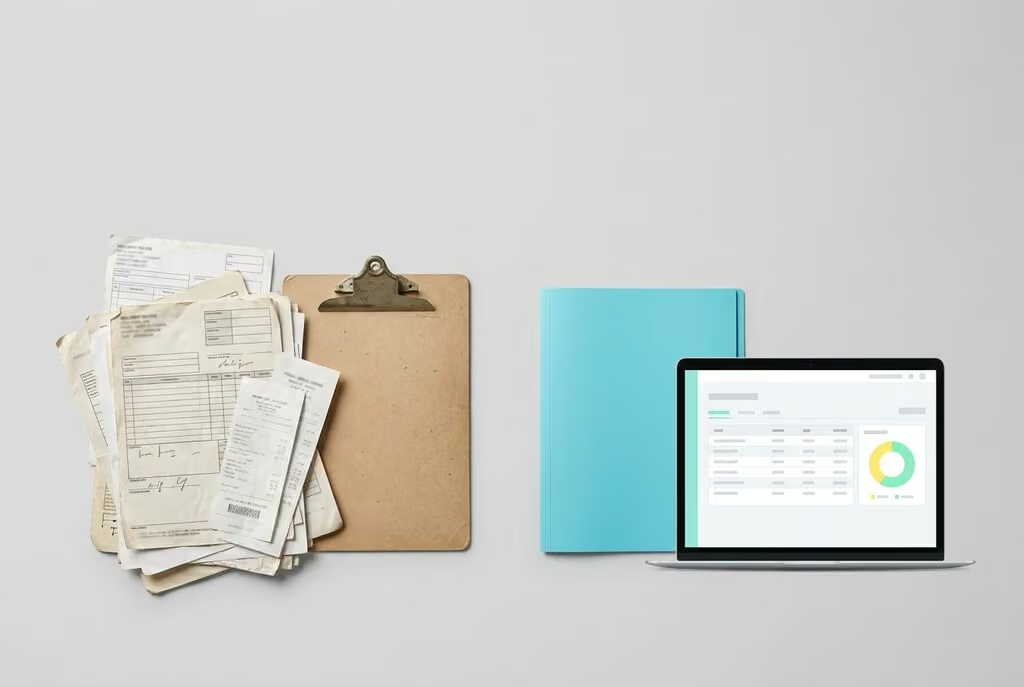
Commercial customers, property managers and companies with many sites in particular no longer want to manage their waste by phone. A customer portal takes many questions off your desk:
- Order and change: book containers, collections and special pickups online, including a preferred date.
- See the status: when is the truck coming, has the container been emptied, is there a problem on site?
- Manage sites: all properties, containers and contracts in one place.
- Volumes, costs and CO₂: reports per site and waste type, as a basis for savings and sustainability reporting.
- Access documents: download invoices, weighing slips and records at any time.
In Germany, waste incineration has also been subject to a CO₂ price under the Fuel Emissions Trading Act since 2024. Customers pay closer attention to volumes and separation, and transparent reports become a selling point.
What should you look for when choosing software?
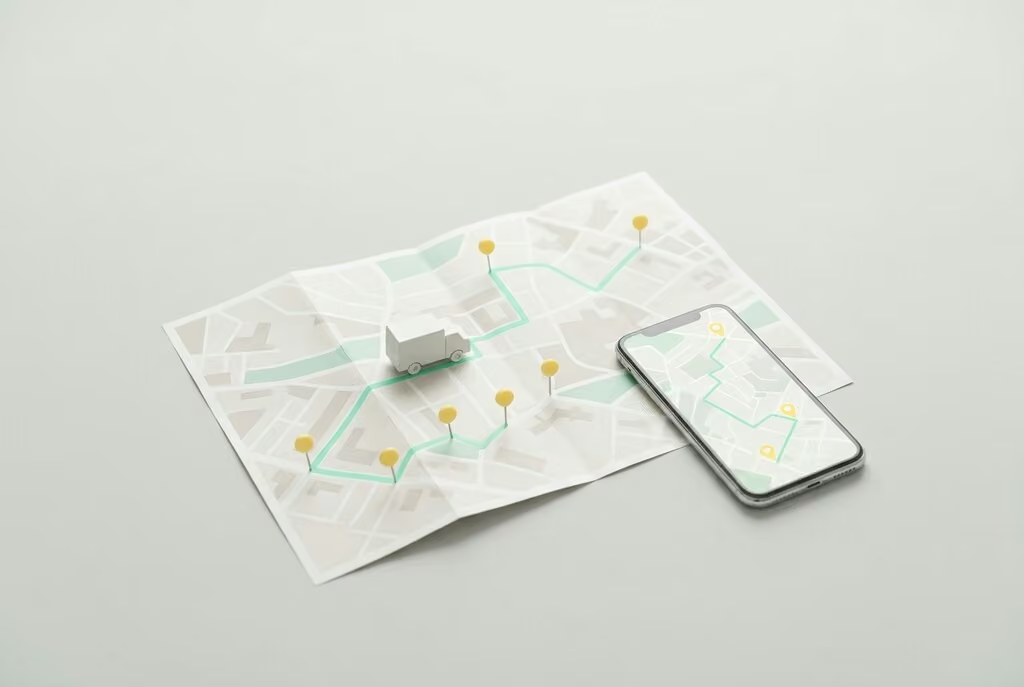
- Mobile for drivers: jobs, navigation, photos and signatures must take just a few taps on a smartphone, even with gloves and a weak signal.
- Real-time dispatch: changes during the day must reach the driver immediately, and feedback must reach the office immediately.
- Interfaces: the weighbridge, accounting, telematics and the electronic waste record procedure (eANV) should be connected instead of retyping data.
- Roles and permissions: dispatch, drivers, accounting, customers and partner businesses each see only what they need.
- Records and documentation: in Germany, records for hazardous waste are kept electronically via the eANV, and commercial waste comes with documentation duties for separate collection. The software should support this instead of creating new lists.
- Data protection: customer data, locations and driver data require careful handling under the GDPR.
- Growth: new sites, partners or services should be easy to add without starting over.
How do you make the rollout a success?
- Start with the biggest time sink. Often that is order intake or typing up weighing slips.
- Involve drivers and dispatch early. They know what works in daily operations and what doesn't.
- Start small and expand. A first module that runs reliably builds trust for the next ones.
- Set a cut-off date. If paper, Excel and new software run in parallel, soon nobody knows what applies.
- Train and adjust. Short briefings at the vehicle or workstation and feedback in the first weeks make the difference.
Common mistakes when digitalizing waste management
- Software for the office, not for the road. If the driver app is cumbersome, people keep calling and writing on paper.
- Forgetting customers. If you only digitalize internally, the flood of calls and emails stays.
- Data without structure. Without consistent waste types, containers and sites, reporting later is hardly possible.
- Ignoring partner businesses. Many jobs run through subcontractors. Without connecting them, new gaps appear.
- No one in charge. Without someone driving the rollout in the company, it fizzles out in day-to-day business.
Checklist: taking stock before you start
- Through which channels do orders come in today, and who transfers them where?
- How is dispatch done, and how do drivers learn about changes?
- Which documents are created on the road and at the weighbridge, and who types them up?
- Which records and registers do you have to keep, and how long does that take today?
- What do customers ask most often?
- Which existing software has to stay and be connected?
With these answers, you can quickly see which building block makes the biggest difference. Free, vendor-neutral support for digitalization in German SMEs is also available from the Mittelstand-Digital centres.
A real-world example: Clearago
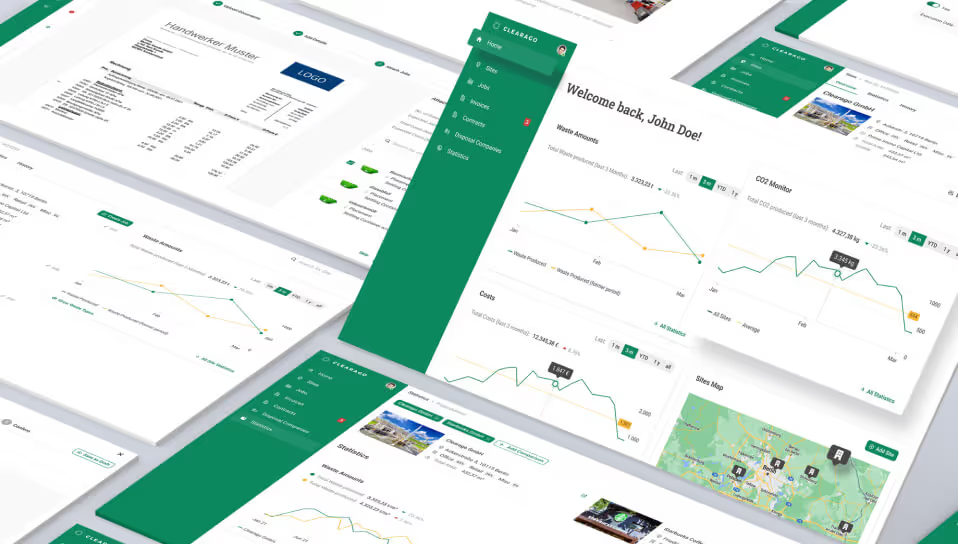
Clearago is a Berlin-based waste management company that works with a network of more than 300 container services across Germany. For new large customers with many properties, paper-based waste management was to become digital and transparent. In short workshops, we worked out the requirements of the new target group, developed user flows and designed a clickable prototype.
The SaaS platform brings together the management of multiple sites, shows waste volumes, costs and CO₂ emissions, and enables the management of orders and invoices. Customers see their waste disposal providers with contract details and can plan orders.