
Where day-to-day property management gets stuck
Whether you manage condominium associations, rental properties or a housing company: a large part of the working day is communication and paperwork. The actual expert work property managers are there for often gets squeezed. Typical bottlenecks:
- The inbox overflows. Tenants, owners, contractors and service providers get in touch via email, portal, letter and phone, often several times about the same issue.
- Repair reports are incomplete. Photos, the exact location or a phone number are missing, and every follow-up question costs another contact.
- Invoices and receipts are typed up by hand. Supplier, property, cost type and allocation key are assigned manually.
- Knowledge sits in files and heads. What does the declaration of division say, what was decided three years ago, which maintenance contract applies to which property?
- Owners' meetings create follow-up work. Minutes, the register of resolutions and implementing decisions take time after every meeting.
This is exactly where AI is strong: it understands language, reads documents and prepares decisions. The decision itself stays with people.
Five use cases for AI in property management
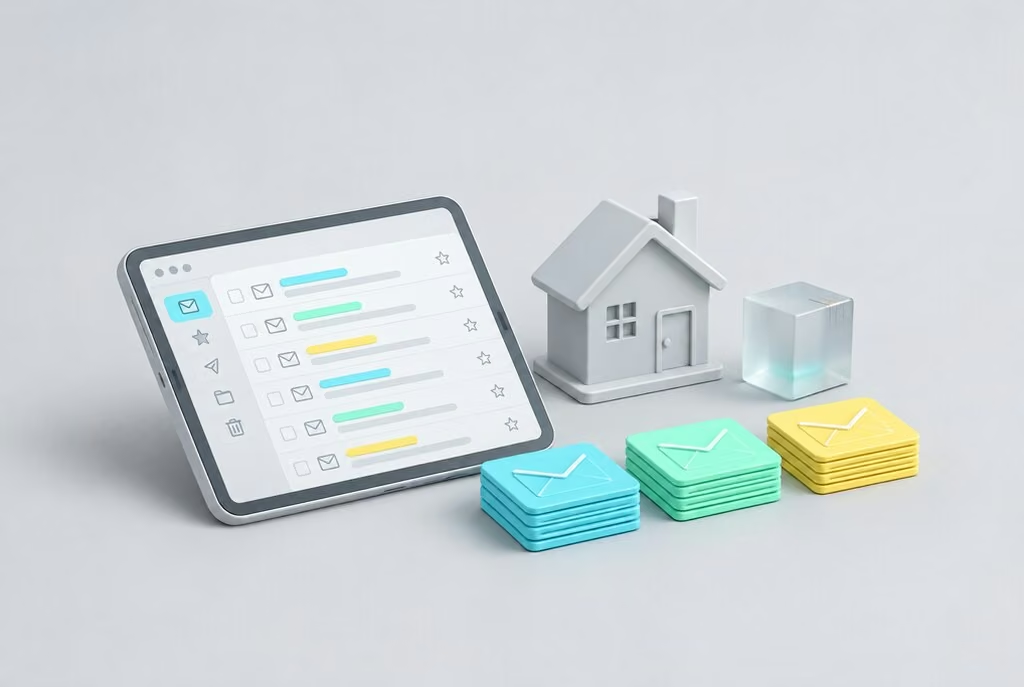
- Triaging requests and suggesting replies: The AI reads incoming messages, recognises property, unit and concern, assigns them to the right case and drafts a reply based on your templates and data. Frequent questions, for example about the service charge statement or responsibilities, can be answered in a fraction of the time.
- From repair report to contractor order: A report becomes a structured case with location, description, urgency and photos. The AI asks for missing details right away. It then suggests the right contractor from your list and prepares the order for approval.
- Capturing invoices and receipts: The AI reads invoices, recognises supplier, property and cost type and suggests the booking. Deviations, for example from the maintenance contract or the quote, are flagged instead of slipping through.
- Minutes and register of resolutions: Notes or a recording of the owners' meeting become draft minutes. Resolutions are prepared for the register, and the resulting tasks end up as cases in the system.
- Finding knowledge in contracts and files: Questions like "Who pays for the windows according to the declaration of division?" are answered by the AI with the source from your documents. That helps new team members and saves digging through folders.
Many firms start with the inbox. That is where the relief in everyday work is felt soonest, and the results are easy to check.
New tool, new software or AI on top of your existing software?
Anyone looking into AI in property management quickly ends up with tool lists and new all-in-one solutions. Yet there are three fundamentally different routes:
| Off-the-shelf AI tool | New property management software with AI | Connect AI to your existing software | |
|---|---|---|---|
| What it is | A point solution, e.g. for phone, email or invoices | Switching to a system that comes with AI features | AI components that work with your system via interfaces |
| Fits when | a single problem needs solving quickly | the current software is being replaced anyway | the software works well and should stay |
| Strengths | Quick start, little effort | Everything from one provider | Your data, processes and templates stay, AI where it helps |
| Limits | Another silo, data maintained twice | Complex migration, training, switchover during operations | Needs interfaces or exports from the existing software |
For many firms, switching property management software is a big step: master data, accounting, statements and established processes depend on it. If the system works well at its core, the third route is often the most sensible. The property management software remains the leading system, the AI works alongside it, reads the data it needs and writes results back. That way no new patchwork of tools emerges, and your team keeps working in the environment it knows.
Which data can be exchanged depends on the software. Many real estate systems offer interfaces, exports or an email inbox that AI can be connected to. This can be checked at the start with manageable effort.
AI agents in property management: what's realistic today
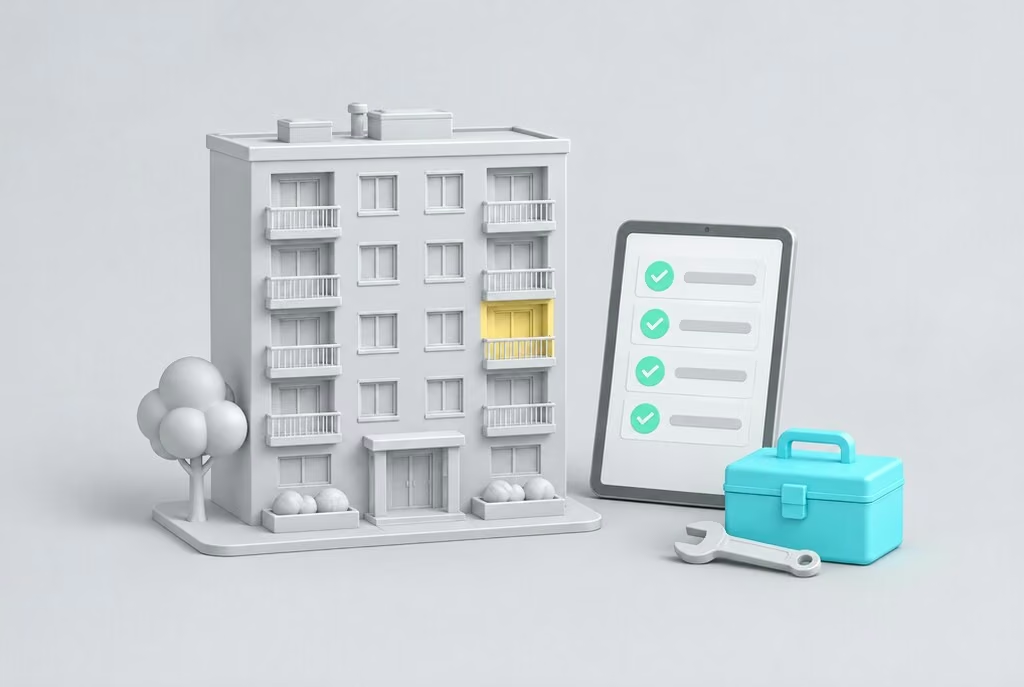
An AI agent goes one step further than an assistant that only suggests texts. It pursues a goal over several steps: read the repair report, find the unit and tenant in the system, request missing photos, look up the responsible contractor and prepare the order. We explain how this works in detail in the article AI agents in business.
What's realistic today:
- Prepare, don't decide. The agent collects, sorts and drafts. A person approves replies to tenants, orders and payments.
- Clear limits. The agent only gets the access it needs for its task, and every step is logged.
- Exceptions go to people. Conflicts, rent reductions or legal questions belong to you and your team, not to the AI.
As experience grows, approval can be dropped for simple, well-tested cases, such as acknowledgements of receipt or standard information.
Tenant data, GDPR and the AI Act
Property management deals with personal data: names, contact details, bank details, consumption figures and sometimes sensitive information in tenant letters. That's why a few points belong before any start:
- Clarify the legal basis and purpose and describe them in your privacy policy.
- Set up data processing agreements: Sign a contract with the AI provider and choose processing in the EU where possible.
- Process only the data you need: The AI gets access to what it needs for its task, not to the entire portfolio.
- Transparency towards tenants: If tenants talk to a chatbot or phone assistant, the AI Act requires you to tell them that an AI is answering.
- Train your team: Anyone using AI at work needs sufficient AI literacy. More on this in the article on AI literacy training.
Our article AI and data protection: GDPR and the EU AI Act gives a detailed overview. For housing companies in particular, the German housing association GdW has published a guide to AI in the housing industry (in German).
Costs and funding
What AI in property management costs depends mainly on the use case, the number of connected systems and the state of your data. A pilot for one team's inbox is much smaller than an agent that handles repair reports across all properties. On top of that come running costs for using the AI models and operations. Which items arise and how to keep the budget small is covered in How much does AI integration cost?.
In Germany, the preparatory consulting, i.e. analysing where AI brings the most benefit in your firm, can be subsidised by 50 to 80 percent through the BAFA programme "Funding of business consulting for SMEs". uberneu is registered there as a consulting firm. You can work out how much you'd get with our BAFA funding calculator.
How to get started with AI in your firm
- Find the biggest time sink. Usually it's the inbox, repair handling or capturing invoices.
- Set a success criterion. For example, fewer follow-up questions per repair or shorter handling time per request.
- Check your software. Which interfaces and exports does your property management software offer, and which data does the AI need?
- Pilot small. One team, one process, real cases, and every reply is checked before it goes out.
- Evaluate and expand. What works in the pilot is rolled out to more properties and processes.
We describe the course of an AI rollout in detail in AI integration in 5 steps.
Common mistakes with AI in property management
- Starting with the tool instead of the problem. A new AI tool without a clear process remains just another silo.
- Bypassing the existing software. If data is maintained outside the property management software, there will soon be two versions of the truth.
- Sending replies unchecked. Especially at the start, every message to tenants and owners should be reviewed by a person before it goes out.
- Settling data protection afterwards. If you only think about processing agreements and access rights after launch, you often have to roll things back.
- Not bringing the team along. The people who talk to tenants every day know which replies work. Without that experience, the AI stays superficial.
Checklist: is your firm ready for AI?
- A process that repeats often and noticeably costs time has been chosen.
- You know which channels requests and invoices come in through today.
- The interfaces or exports of your property management software are known.
- There are templates and sample replies the AI can follow.
- Data protection is settled: legal basis, provider, processing location, access rights.
- It's defined what the AI may do on its own and what a person approves.
- One person on the team drives the rollout and collects feedback.
How uberneu supports you
We help you integrate AI into your existing property management software instead of selling you yet another tool or a system switch. Together we find the process where AI relieves your firm the most and check which interfaces your software offers. Then we build a pilot with real cases, connect it to your systems and expand it step by step: from reply suggestions in the inbox to an AI agent that prepares repair reports.
Data protection, clean access rights and approvals are part of the solution from the start, and we train your team to work with the AI. When the existing software reaches its limits, we also develop tailored extensions or a platform of your own, such as a portal for tenants and owners. In Germany, the preparatory consulting can be subsidised by up to 80 percent through BAFA.